Textile mills and manufacturing plants face unique physical hazards, from heavy machinery to chemical exposure. Discover why implementing WSIB-approved safety training minimizes corporate risk and directly protects your workforce. Learn how flexible emergency protocols keep your production floor compliant, highly efficient, and secure.
Working in a production or textile facility isn’t exactly a quiet desk job. The constant hum of heavy machinery, the lifting of heavy raw materials, and the presence of industrial dyes create a very specific set of workplace hazards. When an emergency happens on the production floor, every single second matters. Enrolling your staff in a comprehensive First Aid course is the most effective way to protect your team. It takes your company from just reacting to accidents to proactively managing them before they spiral out of control.
Why are textile facilities uniquely hazardous?
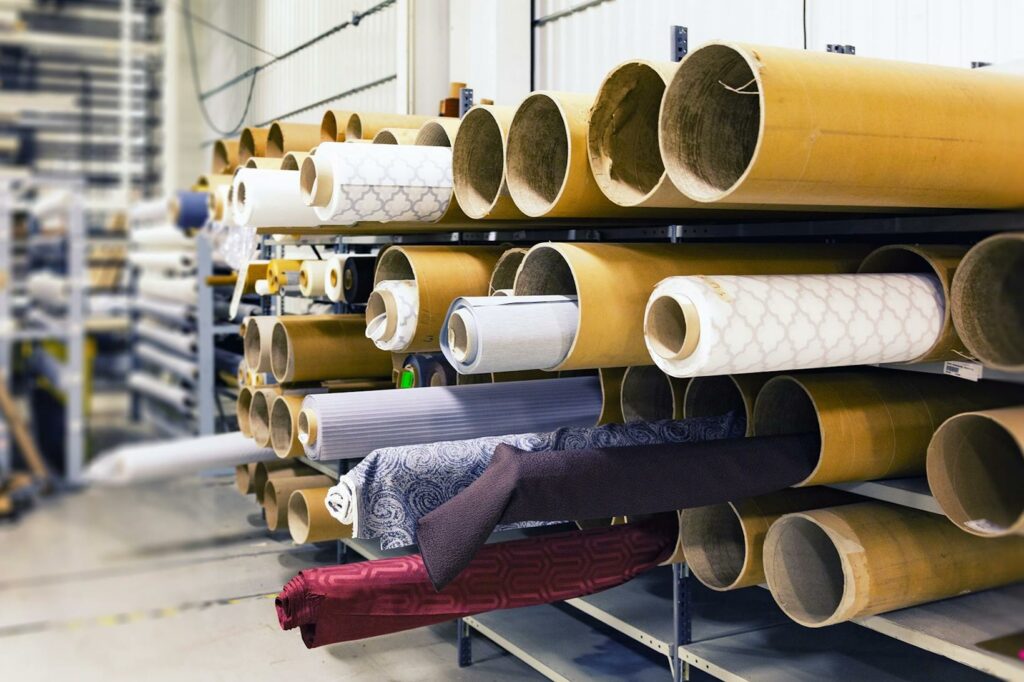
Think about the sheer volume of moving parts in a garment or fabric plant. You have high-speed looms, industrial sewing machines, and massive fabric rolls that weigh hundreds of pounds. Employees often deal with repetitive motion, heavy lifting, and sometimes harsh chemical treatments used in dyeing processes.
It is a demanding environment. Slips, trips, and severe lacerations are always a threat. But the risks aren’t just mechanical. Sudden health crises, like a worker experiencing cardiac arrest or severe heat exhaustion near a steaming press, can happen at any moment. If your floor managers don’t know how to step in, the results can be devastating.
How does emergency training actually reduce corporate risk?
Safety isn’t just a moral obligation. It is a massive operational necessity. Ignoring safety protocols opens your business up to heavy liabilities, workplace fines, and plunging employee morale.
When an accident stops production, you lose money. By investing in proper, hands-on training, you are actually investing in the company’s financial stability. Certified employees act quickly. They secure the scene, stabilize their injured coworker, and prevent further chaos. This immediate response significantly cuts down on severe outcomes, which directly reduces your legal and financial exposure.
- Ensures Compliance: Meets strict provincial occupational health and safety laws.
- Lowers Liability: Demonstrates due diligence in protecting your workforce.
- Boosts Morale: Workers perform better when they know their employer genuinely cares about their physical well-being.
What makes blended learning the right fit for busy plants?
We know what operations managers are thinking. Pulling a dozen workers off the line for a multi-day classroom session is a logistical nightmare. In booming industrial hubs—like Vaughan’s massive manufacturing sector—downtime is simply not an option.
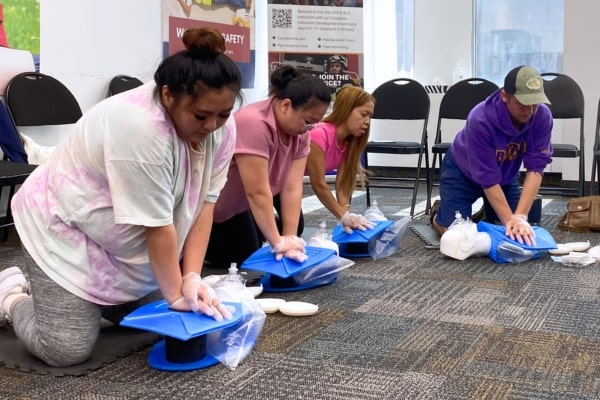
This is exactly why blended learning is the perfect solution for production facilities. Workers complete the theoretical portion of their safety certification online, reviewing modules at their own pace between shifts or at home. After that, they just attend a short, highly focused in-class session to master the physical techniques, like CPR chest compressions or applying a tourniquet.
You should always aim to partner with Canada’s definitive leader in WSIB- and OHS-approved life-saving training. Top providers partner with the Canadian Red Cross and Heart & Stroke Foundation. With a 99.9% student success rate, you can trust that your team will actually retain the knowledge they need to save a life, all without crippling your production schedule.
If you are looking for first aid training near the Steeles Avenue West corridor, close to Highway 400, or other industrial areas near our facility, then you may reach out to Coast2Coast First Aid/CPR – Vaughan in that area.
Frequently Asked Questions
1. How many employees need first aid certification per shift? The exact number depends on your local labor laws and the total number of people on the floor. Generally, WSIB guidelines require at least one certified person on duty at all times, but high-risk environments often require more.
2. Does textile manufacturing require special safety protocols? Yes. Because of the use of specific chemicals, industrial dyes, and heavy cutting machinery, facilities often need specialized safety data sheets (SDS) alongside standard emergency response plans.
3. How long does a standard Red Cross certification last? Standard first aid and CPR certifications are valid for three years. However, many manufacturing plants run annual refresher drills to keep their safety teams completely sharp.
4. Is blended learning WSIB approved? Absolutely. As long as you train with a recognized provider, the blended format (online theory combined with an in-person practical assessment) fully meets WSIB and OHS workplace requirements.
5. What actually happens during the in-class portion of the training? The in-class session focuses purely on physical skills and muscle memory. An expert instructor will guide you through real-life scenarios, correcting your CPR hand placement, and showing you exactly how to operate an Automated External Defibrillator (AED).