Dining chairs often remain useful long after their original finish stops working with the room. The table may have changed, the walls may have been repainted or an open-plan layout may now connect the dining area with a different kitchen and living space. The chairs still feel comfortable, yet their colour or fabric makes the whole arrangement appear disconnected. Buying a new set is one response, but it is rarely the only one. A more focused update can change how the chairs relate to everything around them. The key is to identify whether the problem is condition, colour, visual weight or a combination of all three. Once that is clear, the room can be adjusted without starting again.
Work out why the chairs feel out of place
A chair can clash with a dining area in several ways. Dark upholstery may feel too heavy after the room has been made lighter. A cool grey fabric may look detached from warmer timber, flooring or wall colours. Visible wear can also make the dining space seem neglected even when the rest of the room is carefully maintained.
Shape matters too. High-backed chairs already have a strong visual presence, so a bold fabric may dominate a small dining area. Simpler chairs can tolerate more colour or texture because their outline is less imposing.
Look at the chairs from the entrance to the room, not only from the table. In an open-plan home, they may be visible from the kitchen or sitting area for most of the day. The update should therefore respond to the wider space rather than one isolated corner.
Use colour to create a connection, not a perfect match
A dining area usually looks more settled when its colours relate to nearby materials. That does not mean the chairs must match the curtains, walls or sofa exactly. Repeating a general undertone is often enough.
Warm beige, muted green or soft brown can connect naturally with timber and warmer neutrals. Cooler stone or blue-grey tones may suit rooms with pale flooring, metal details or cleaner architectural lines. A stronger colour can work when the rest of the space is restrained, particularly if the chairs are intended to act as the main accent.
Texture changes the effect of colour. A flat, smooth fabric may feel sharper and more formal, while a visible weave tends to soften the same shade. This distinction is useful when the chosen colour is right but the room still needs more warmth or depth.
Before making a decision, compare the fabric in morning and evening light. Dining areas are often used under artificial lighting, where undertones can appear quite different from those seen beside a window.
Refresh the chairs while keeping what still works
When the frames are stable, the seat height suits the table and the chairs remain comfortable, replacing them can create more problems than it solves. A new set may alter the proportions of the room, require a different table clearance or introduce a shape that is less practical.
IKEA chair covers offer a more focused way to change the visible surface while retaining the furniture’s familiar dimensions. The exact chair model still needs to be identified because back heights, seat shapes, armrests and skirt styles vary between ranges.
A category such as Comfortly IKEA chair covers is most relevant when the chairs are identifiable IKEA models and the aim is to update their colour, texture or finish without replacing the frames. Choosing by model helps preserve the chair’s shape instead of disguising it beneath a loose, universal cover.
IKEA chair covers can also bring consistency to chairs that have faded unevenly or been used at different rates. A coordinated set of covers makes the dining arrangement feel intentional again, even when the table and surrounding furniture stay unchanged.
Build the rest of the update around the chairs
Once the chair colour has been decided, smaller changes can reinforce it. A pendant light can define the dining zone in an open-plan room. A rug may provide contrast between the chairs and the floor, provided it is large enough for the chairs to move comfortably. Table linen, ceramics or a single decorative object can repeat part of the new palette without making the space feel overly arranged.
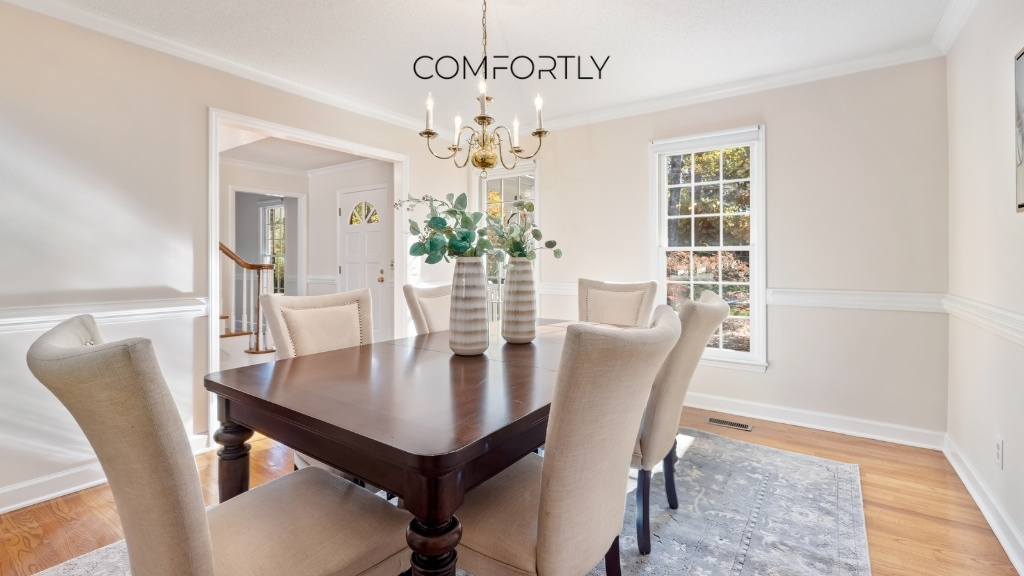
Consider a room with a light oak table, cream walls and chairs covered in a cold charcoal fabric. Replacing every item would be unnecessary. A warmer, textured chair cover could connect the seats with the timber, while a simple pendant and one darker accessory would retain definition. The room changes because the visual relationships improve, not because everything is new.
This approach also prevents the common mistake of adding decorative pieces before addressing the largest source of contrast. When six chairs occupy the centre of the room, their colour usually has more influence than a collection of smaller accessories.
What should you keep when updating the dining area?
Keep the elements that already function well. A comfortable chair, a suitably sized table and a practical layout have value even when their finishes feel dated. Change the surface or colour that is causing the disconnect, then allow the rest of the room to respond with a few deliberate adjustments.
A successful dining-area update does not need to erase the room’s history. It should make the chairs feel connected to the current interior while preserving the comfort and proportions that made them worth keeping in the first place.